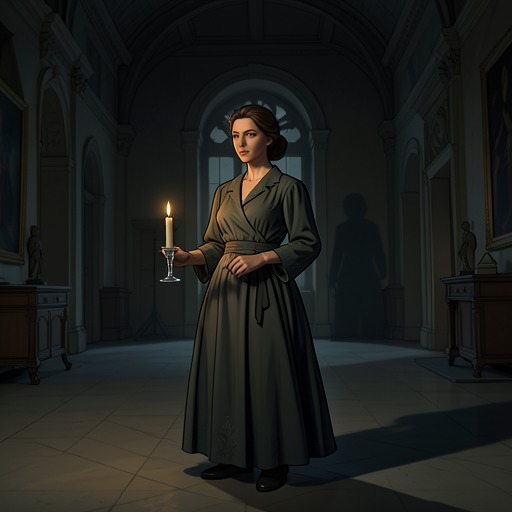
Alfred de la Chalonnière
The Day of the JackalAlfred de la Chalonnière’s life divides sharply between the lean Resistance captain remembered by his wife and the ageing Baron glimpsed in a society-magazine photograph. Once a commanding partisan known as Pegasus, he returned after the war to inherited lands and a chateau. But the restoration of his title and estate did not restore the intimacy of his marriage: the country life soon wearied him, while Paris and its cabarets drew him away. His story is presented chiefly through his wife’s memory and the photograph she studies, making the distance between the man she loved and the Baron he has become its defining feature.
Resistance Years and Marriage
In 1942, Alfred was in his mid-thirties and serving as a captain among the Resistance partisans. His future wife was then a teenage girl running messages in the mountains. She remembered him as lean and hawk-faced, a commanding figure whose code-name was Pegasus and who won her heart. Their relationship began amid clandestine wartime conditions, far from the inherited estate and public life that would later define his title.
They married a year after they met, in a secret ceremony in a cellar chapel conducted by a priest of the Resistance. His wife was expecting their son, whom she gave birth to at her father’s house. The details place their early family life within the risks and improvisations of the Resistance, before Alfred’s return to aristocratic property transformed their circumstances. The account does not describe the son’s later life, but his birth marks the start of the household Alfred would eventually bring back to the chateau.
Return to the Estate
After the war, Alfred’s father died of a heart attack as the Allied armies swept across France. Alfred emerged from the heather and became the Baron of Chalonnière, bringing his wife and son back to the chateau. The countryside’s peasants cheered their return. For a time, the restoration of the family’s lands and properties appeared to offer a homecoming: the former partisan captain resumed a hereditary position and returned with his family to the estate.
That restoration, however, did not hold his interest. Alfred soon tired of the estates. The account connects his attraction to Paris and the cabarets with an urge to make up for the years of manhood he had lost in the undergrowth during the war. His movement away from the chateau is therefore not simply a change of scenery: it sets the postwar Baron’s appetite for metropolitan pleasure against the rural homecoming that had once drawn his family and the local peasantry together.
Public Image and Marital Estrangement
The photograph his wife examines in a Paris society magazine presents Alfred not as the remembered Pegasus but as a visibly ageing public figure. He is grinning into the flashbulb, his attention divided between the camera and the prominent bosom of a starlet beside him. The magazine identifies the woman as a cabaret dancer who had risen from being a bar hostess; she says she hopes one day to marry the Baron and calls him a very good friend. The clipping offers no independent account of Alfred’s feelings, but its image and the dancer’s reported words give his wife a public sign of his closeness to another woman.
The contrast between the photograph and his wartime appearance is stark. Looking at his lined face and scrawny neck, his wife wonders what became of the handsome young captain she loved. The narrative gives his age as fifty-seven, while noting that he could have passed for seventy. His physical decline sharpens the distance between the heroic, commanding figure of her memory and the man caught in a society photograph, performing for a camera beside a cabaret star. The title of Baron remains, but the image makes little of the youthful presence that first attracted her.
At the chateau, the effects of his absence are visible in the household itself. His wife and her companion have become, in practice, its curators: two-thirds of the rooms are shut and covered against dust. She thinks of the children no longer playing in the park and of the master of the household no longer saddling his horse in the courtyard. These absences make the estate Alfred reclaimed after the war feel less like a restored family home than an emptied stage for a life that has moved elsewhere.
His Wife’s Response and Narrative Role
The clipping provokes more than sorrow in Alfred’s wife. She throws it and its accompanying letter to the floor, then studies herself in a full-length mirror, assessing her figure and the effects of age. Remembering the man who had been with her just over twenty-four hours earlier, she wishes she had stayed at Gap and imagines the two of them travelling under a false name like runaway lovers. She concludes that Alfred is not the only one who can play that game. Her response makes the marriage’s estrangement reciprocal in feeling, though the evidence does not establish that Alfred knows of her lover or that either spouse has formally ended the marriage.
Alfred is thus rendered indirectly: through his wife’s recollections, the public image sent to her, and the household’s condition. The narrative juxtaposes the wartime clandestinity that formed their bond with the postwar visibility of the Baron in a society magazine. His return to inherited status restores land and title, but not the shared life implied by the family’s homecoming. The chateau’s covered rooms and the gap between Pegasus and the ageing Baron give concrete form to that failure of restoration.